Beyond the Glucose Number
Positioning a Japanese CGM Brand for U.S. Entry
Role
UX Researcher
Skills
Market Research, Competitive Analysis, SWOT, Product Positioning, User Story Development
Timeline
4 Weeks, Research — Strategy Recommendation
Context
Simulated client engagement (bootcamp)
Overview
This was a simulated engagement. The client, data, and constraints were provided by the program.
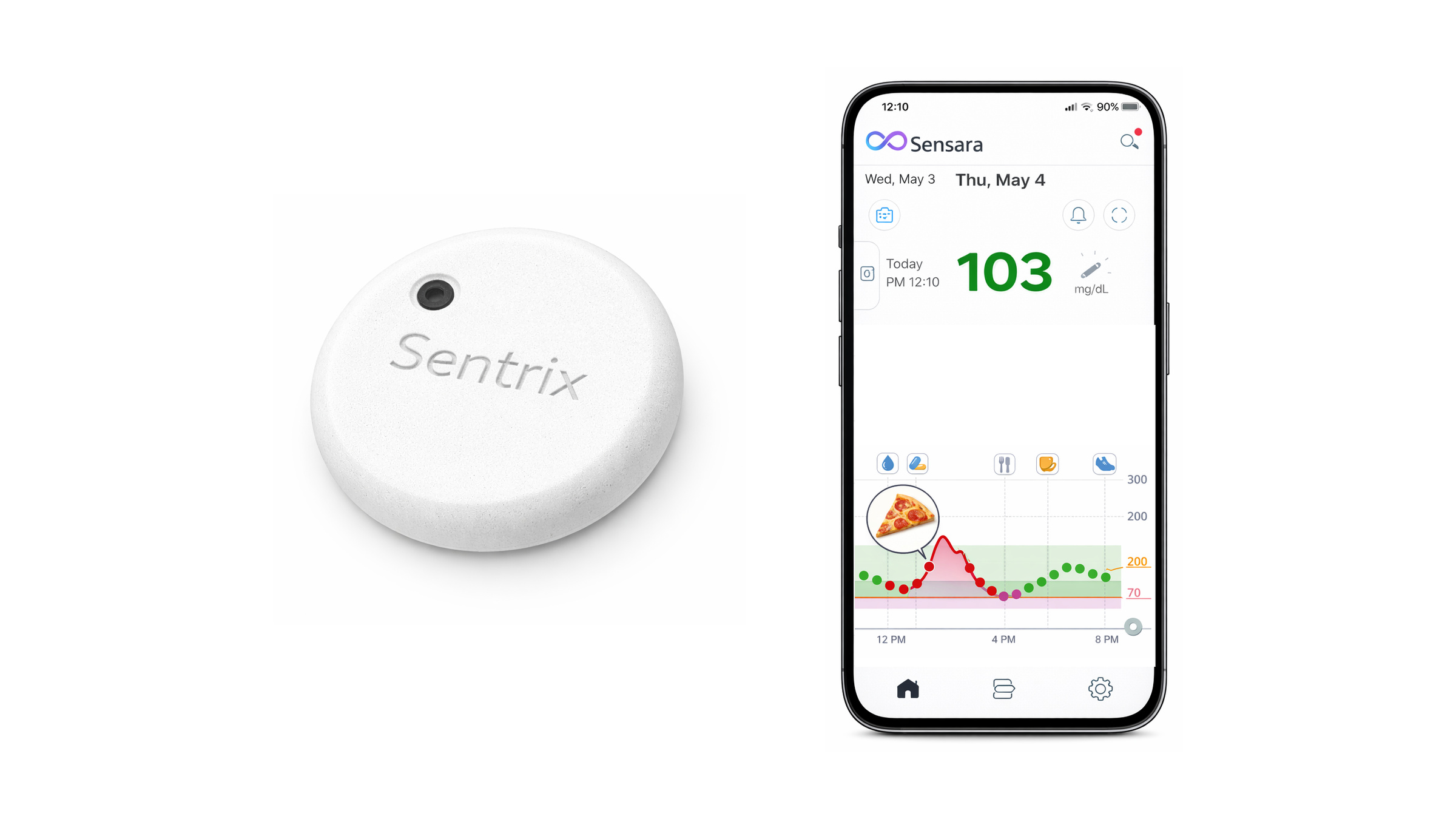
Sentrix is Japan's #1 CGM brand, with over 1.6 million software users and $525M in revenue. Its U.S. product is the Sensara Aero sensor and Sensara app. The catch: the U.S. market is dominated by Abbott (56.74%), Dexcom (35.2%), and Medtronic (6.88%) — a combined 98.8% share.
We ran a full competitive analysis and found a white-space positioning: "The Lifestyle Analyst." We developed user stories and built a 5-year P&L projection targeting 2% market share and $520M in revenue. I ran the competitive analysis and SWOT, and built the executive summary. Projections are our own model, built from public market data.
Breaking Into a Monopoly
Three incumbents hold 98.8% of the U.S. CGM market. We analyzed each across hardware specs, pricing, insurance coverage, app functionality, and user reviews.
7M users
Abbott Freestyle Libre
"The AI Assistant" — minimalist interface, Libre Assist AI predicts glucose impact from food photos. $150/mo retail, $0–40 insured.
2.9M users
Dexcom G7
"The Automated Bodyguard" — deep insulin pump integration, real-time alert engine. $450–550/mo retail, $30–70 insured.
~6,000 users
Eversense 365
"The Long-Term Clinical Guardian" — one-year implantable sensor for physician-driven management. $3,500–4,000/yr.
Mapping the Competitive Landscape
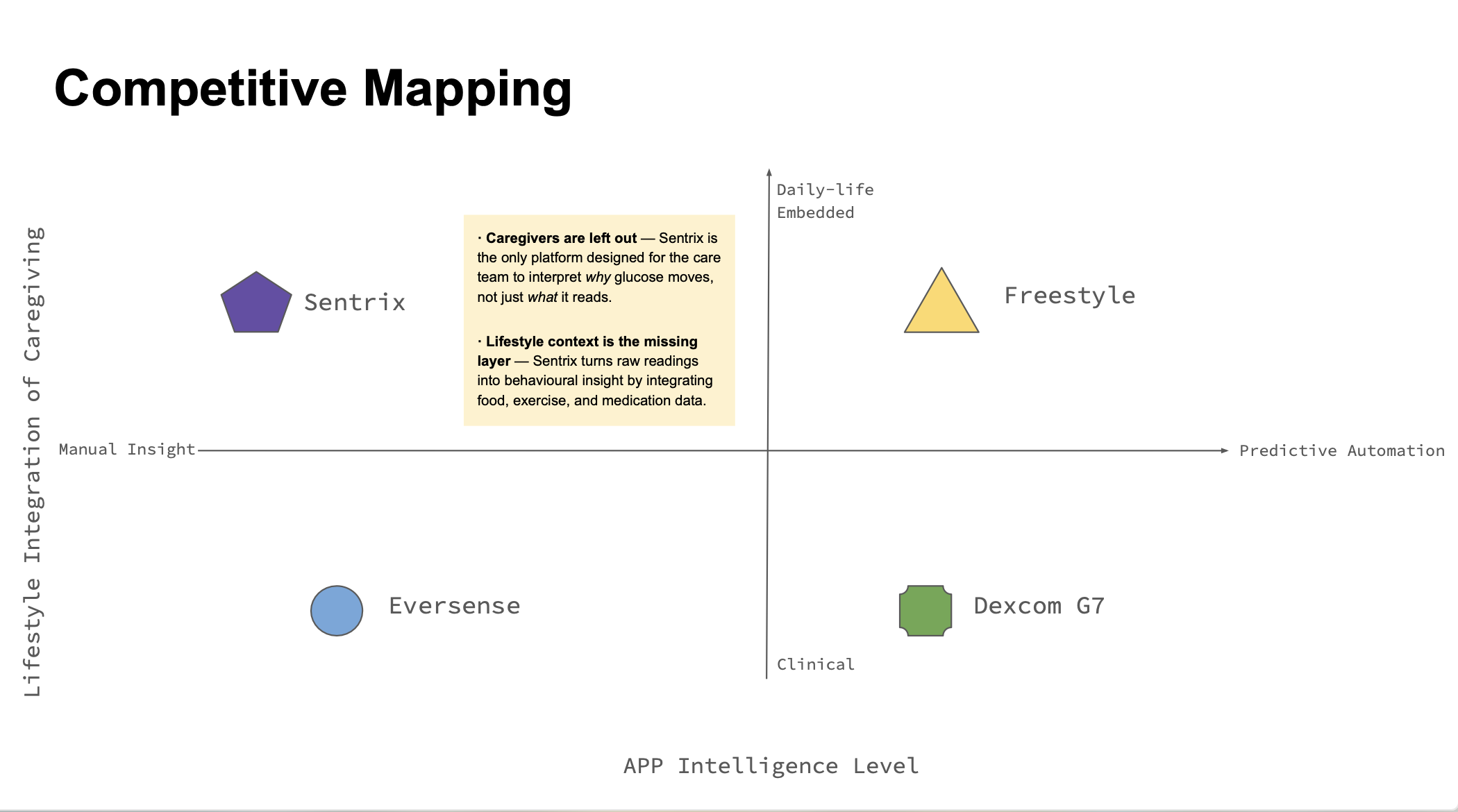
One quadrant sat empty: high lifestyle integration plus caregiver-centered intelligence.
We mapped competitors along two dimensions — App Intelligence Level (from manual insight to predictive automation) and Lifestyle Integration of Caregiving (from clinical-only to daily-life embedded). All three incumbents clustered elsewhere: clinical automation (Dexcom), everyday simplicity (Freestyle), or passive monitoring (Eversense). None were designed for the care team to interpret why glucose moves — only what it reads.
Critical Product Question
How does Sentrix differentiate in a market where three companies already do "glucose monitoring" better than anyone?
Positioning: "The Lifestyle Analyst"
7-level trend arrows
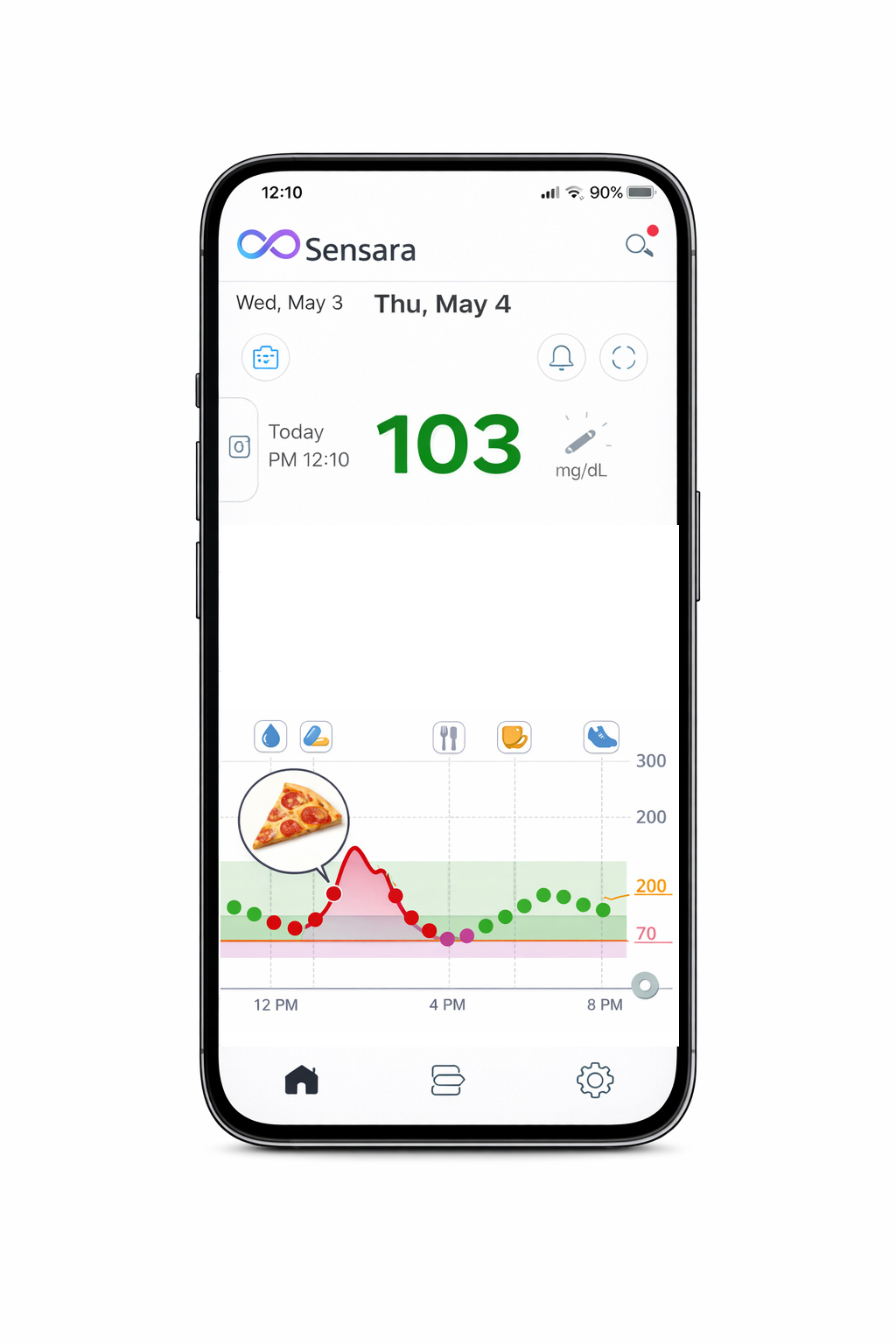
Unlike competitors showing raw numbers, Sensara visualizes directional glucose trends to help users and caregivers understand trajectory.
Lifelog-centered interface
Integrates food, exercise, and medication data to turn raw readings into behavioral insight.
Caregiver interpretation tools
Enables clinicians and caregivers to understand context, not just data points.
Event comparison for insulin adjustment
Side-by-side comparison of glucose responses to different activities for evidence-based treatment decisions.
User Stories

Mia (10)
Pediatric Patient
Mia's parents were constantly worried about her rapid glucose drops during school and soccer. With the Sensara app, caregivers could see trends and alerts in real time. Activity context made drops easier to interpret. The endocrinologist used shared reports to adjust treatment. Result: fewer urgent lows, less caregiver anxiety, and more independence for Mia.

David (52)
Adult Patient
A marketing executive whose frequent business travel made glucose control unpredictable. He couldn't tell if spikes were caused by food, stress, or activity. With the Sensara app's event-logging and contextual overlays, he identified repeat triggers, shared evidence-based reports with his clinician, and made targeted routine adjustments. Result: higher time-in-range, fewer mystery spikes.
SWOT Analysis
strengths
- • Smallest form factor with 30-minute warm-up
- • Integrated data sharing for remote dosage management
- • FDA approval and data infrastructure secured
weaknesses
- • Zero brand awareness and trust in the U.S.
- • Data privacy concerns regarding provider access
- • No current market share in a heavily consolidated market
opportunities
- • Predictive glucose analytics via AI/ML
- • Free trial strategy to convert existing CGM users
- • Aggressive pricing ($75/month) to undercut incumbents
threats
- • Insurance qualification uncertainty
- • Competitor financial depth and ability to cut prices
- • Potential disruption from non-invasive monitoring (Apple, Samsung)
Executive Summary
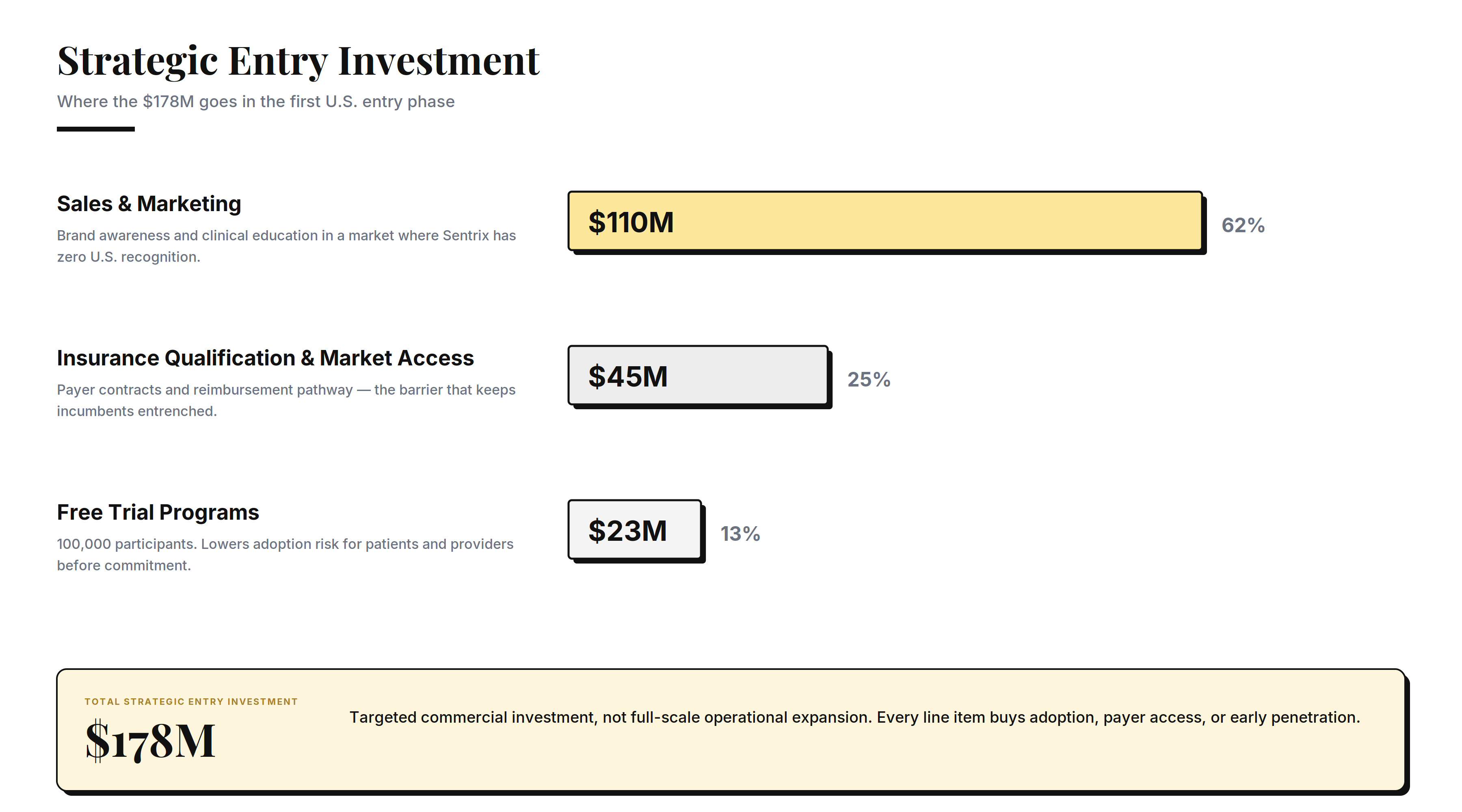
The plan enters provider-first, on a $178M investment, and grows through pediatric, elderly, and remote-care populations where caregiver involvement is highest.
Competitive Advantage
- • Patients, caregivers, and providers share one decision ecosystem
- • Caregivers and clinicians manage multiple patients in a single system
- • Event-based analytics turn readings into life context, not passive numbers
Proposed Solution
- • Enter through pediatric, elderly, and remote care populations, where caregiver involvement is highest and switching resistance is lowest
- • Provider-first adoption through clinical partnerships builds trust and reimbursement alignment
- • A structured free trial lets patients and providers see the value before committing
Risks
- • Insurance reimbursement delays
- • Incumbent pricing retaliation
- • Brand awareness and trust gap in the U.S.
- • Ongoing consolidation pressure from U.S. competitors
Recommended Next Steps
- 1Run pilot programs with provider partners to validate clinical adoption and workflow fit
- 2Roll out controlled free trials in priority segments to measure conversion and retention
- 3Start reimbursement preparation through early payer engagement and outcomes data
- 4Scale marketing only after validation milestones are met
Outcome
Before
0%
U.S. market share
0
U.S. users
Unknown
Competitive positioning
After
2%
Target U.S. market share
$520M
Projected 5-year revenue
"Lifestyle Analyst"
Clear differentiated positioning
Reflection
In a market this concentrated, a better feature is a trap. Abbott, Dexcom, and Eversense are all excellent at what they do. The opening wasn't to out-automate Dexcom or out-simplify Abbott. It was to redefine what a CGM companion app should do: shift from passive monitoring to active behavioral analysis, and from patient-only tools to caregiver-inclusive platforms. The move wasn't to win on the existing axes of competition — it was to change them.
Thanks for reading!